Add to wishlistAdd to compare


Motorcycle Batteries
Only products on sale
Showing all 18 resultsSorted by latest
- Add to wishlistAdd to compare
Antigravity YTX12 High Power Lithium Battery w/Re-Start
SKU: antAG-ATX12-HD-RS - Add to wishlistAdd to compare
Antigravity XPS V-12 Lithium Battery – Right Side Negative Terminal
SKU: antAG-YTX12-24-R - Add to wishlistAdd to compare
Twin Power YTX-20HL Shocker Battery Replaces H-D 65989-97A 310 CCA
SKU: twp781154 - Add to wishlistAdd to compare
Twin Power YTX-30L Shocker Battery Replaces H-D 66010-97A 430 CCA
SKU: twp781156 - Add to wishlistAdd to compare
Twin Power YTX-20HL Shocker Gel Battery Replaces H-D 65989-97A 310 CCA
SKU: twp781234 - Add to wishlistAdd to compare
Twin Power YTX-32HL Shocker Gel Battery Replaces H-D 66010-97A 445CCA
SKU: twp781235 - Add to wishlistAdd to compare
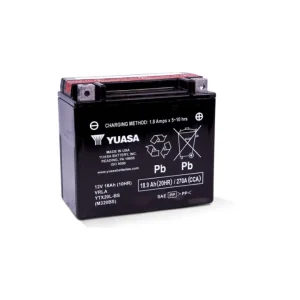
Yuasa YTX20L-BS Maintenance Free AGM 12-Volt Battery w/Bottle
SKU: ysaYUAM320BS - Add to wishlistAdd to compare
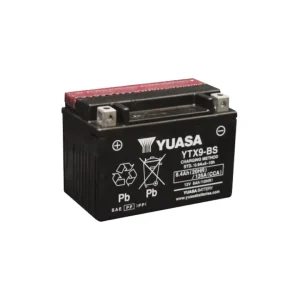
Yuasa YTX9-BS Maintenance Free AGM 12-Volt Battery w/Bottle
SKU: ysaYUAM329BSIND - Add to wishlistAdd to compare
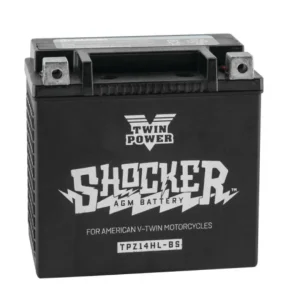
Twin Power YTX-14L Shocker Battery Replaces H-D 65958-04 220 CCA
SKU: twp781152 - Add to wishlistAdd to compare
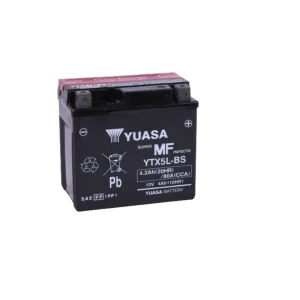
Yuasa YTX5L-BS Maintenance Free AGM 12-Volt Battery w/Bottle
SKU: ysaYUAM32X5B - Add to wishlistAdd to compare
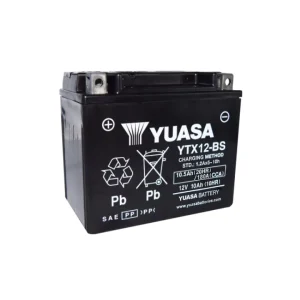
Yuasa YTX12-BS Maintenance Free AGM 12-Volt Battery w/Bottle
SKU: ysaYUAM3RH2SIND - Add to wishlistAdd to compare
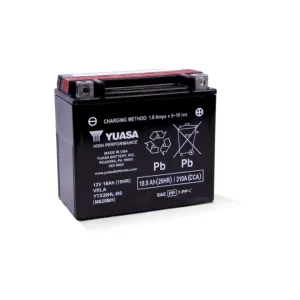
Yuasa YTX20HL-BS High Performance AGM Battery w/Bottle
SKU: ysaYUAM620BH - Add to wishlistAdd to compare
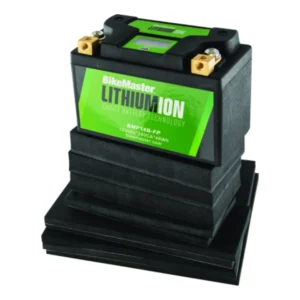
BikeMaster Lithium-Ion 2.0 Battery
SKU: bkm780854Product information
- Battery Model
BMP14-FP, BMP14B-FP, BMP14BL-FP, BMP18-FP, BMP21-FP, BMP9-FP
- Battery Model
- Add to wishlistAdd to compare
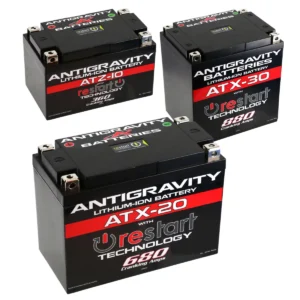
Antigravity Lithium Battery with Re-Start (YTX20 / YTX30 / YTZ10)
SKU: antAG-ATX20-RS
Motorcycle Battery
A dead motorcycle battery has a way of finding you at the worst possible time — cold morning, empty parking lot, no jump box in sight. That’s usually the moment people start looking to buy a motorcycle battery instead of babying an old one through one more season. We’d rather you order the right one now.
This page is where we keep our full motorcycle batteries for sale lineup: Yuasa AGM, Antigravity lithium, Twin Power Shocker and Gel replacements, and BikeMaster’s lithium-ion packs. Different chemistries, different bikes, same goal — a battery that cranks hard the first time, every time.
Picking a Chemistry That Actually Fits Your Bike
People ask us constantly which motorcycle battery is “the best,” and honestly, it depends on what you ride and how hard you ride it. Here’s how we’d break it down:
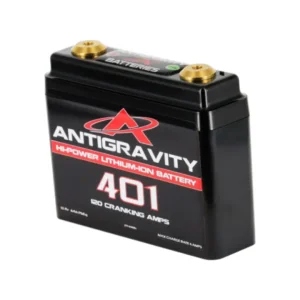
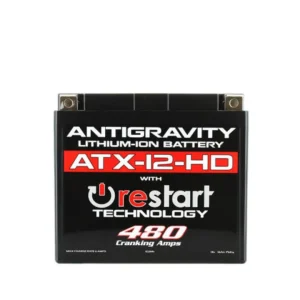
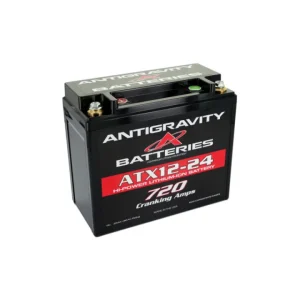
Lithium motorcycle battery (Antigravity). This is the one to grab if weight is your priority — track bikes, sportbikes, anything where a few pounds off the bike actually matters. Antigravity’s cells run several pounds lighter than a comparable lead-acid unit, and their RE-START feature is genuinely useful: leave your lights on by accident, and the battery puts itself into a low-power sleep state instead of dying completely, so you can still hit the starter and get home. If you want the lightest motorcycle battery on this page, this is it.
AGM motorcycle battery (Yuasa). Sealed, spill-proof, no maintenance required. Yuasa has been the OEM standard for a long time, and their AGM line is built to match or beat the cold cranking amp rating your bike came with from the factory. If you just want a straightforward, drop-in replacement and don’t want to think about it again for a few years, start here.
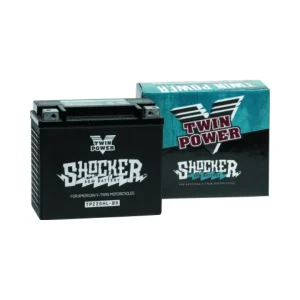
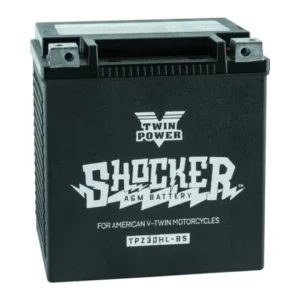
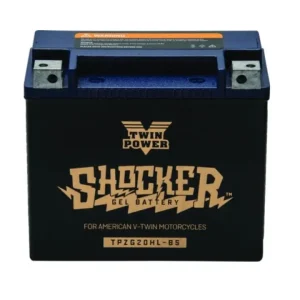
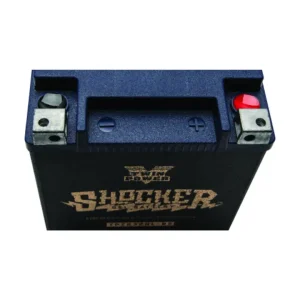
Shocker and Gel batteries (Twin Power). V-twins shake harder than most other engines, and that vibration is what kills a lot of standard batteries early — internal plates crack, connections loosen. Twin Power’s Shocker and Gel batteries are built with that specifically in mind, so they hold up better on Harleys and other high-torque cruisers. Gel cells also tolerate being mounted at an angle, which a flooded battery won’t forgive.
Lithium-Ion 2.0 (BikeMaster). A more affordable way into lithium technology. You still get the weight savings and faster recharge, just without the price tag of a full performance-grade pack.
Not sure what fits? The vehicle filter above lets you search by make, model, and year, and it’ll narrow this whole list down to what actually bolts into your bike.
What Riders Usually Grab, By Bike Type
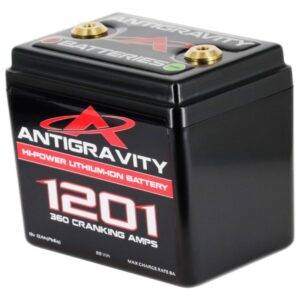
If you’re on a Harley, Indian, or another cruiser, a Twin Power Shocker or Gel battery matched to your stock CCA rating is usually the safer bet — that vibration resistance matters more than shaving weight. Sportbike and track riders tend to go straight for Antigravity lithium, since a lighter motorcycle battery translates directly into a better power-to-weight ratio. If you’re just running a standard commuter bike and want zero drama, a Yuasa AGM battery is the low-maintenance answer. And for off-road and adventure bikes, something compact like the Antigravity Small Case series or a BikeMaster pack keeps unsprung weight down without sacrificing cranking power on rough terrain.
This is really the same logic that applies across powersports battery shopping in general — ATVs, UTVs, and snowmobiles all face the same trade-off between weight, vibration resistance, and price, so if you’re outfitting more than one machine, it’s worth thinking about chemistry the same way for each.
Why Bother Upgrading From Stock?
Stock lead-acid batteries are heavy, they leak if you tip the bike, and they lose a noticeable chunk of their cranking power once temperatures drop. Swap to a lithium or AGM battery and you get faster starts, a longer service life, and — with an Antigravity lithium pack specifically — somewhere around 5 to 8 lbs off the bike. That’s not nothing on a sportbike build. If your bike is a high-vibration V-twin or spends time off-road, the Twin Power Gel and Shocker lines hold up longer than anything you’d find at a standard auto parts counter.
A Few Things That Actually Extend Battery Life
Don’t let it sit dead. A discharged battery loses capacity fast, especially over a winter in storage. Put it on a charger or maintainer any time the bike’s parked for more than a couple weeks.
Match the charger to the chemistry. A standard lead-acid charger can actually damage a lithium battery. If you bought an Antigravity battery or BikeMaster lithium pack, use a lithium-specific tender.
Keep the terminals clean. Most “dead battery” complaints we hear are really just corrosion buildup blocking the connection.
Cold snap trick: if it’s below freezing, flip your headlight on for about 30 seconds before you hit the starter. It wakes the lithium chemistry up enough to deliver full cranking power.
Grab a motorcycle battery charger with your order if you don’t already have one — it’s the single easiest way to make any battery on this page last longer.
Questions We Get a Lot
Can I replace a lead-acid battery with a lithium one?
Usually, yes — it’s a direct swap. Just make sure your charging system is in good shape, and store it on a lithium-specific tender in the off-season.
What does RE-START actually do?
It’s Antigravity’s built-in safety net. Instead of draining completely if you leave something on, the battery shuts itself into a low-power state and holds back just enough charge to start the bike.
Are Gel and Shocker batteries worth the extra cost over standard AGM?
If your bike vibrates a lot — cruisers, V-twins, dirt bikes — yes. That’s exactly the failure mode they’re built to resist.
How do I find the right battery for my specific bike?
Use the vehicle filter above, or check the group size printed on your old battery (YTX12, YTX20HL, etc.) against what we list here.
How much weight does switching to lithium actually save?
Around 5 to 8 lbs on most motorcycles with an Antigravity swap — noticeable if you’re chasing every bit of performance.
Do these batteries start reliably in cold weather?
AGM and Gel batteries handle cold starts fine as-is. For lithium, just cycle your lights for 30 seconds first to warm the cells up.
What’s the typical lifespan of a motorcycle battery?
Two to five years, depending mostly on how it’s stored. A maintainer during the off-season is the biggest factor in getting the longer end of that range.
 Account
 Categories
 Car filter
 Search
 Compare
 Filter
 Top
Top