Add to wishlistAdd to compare
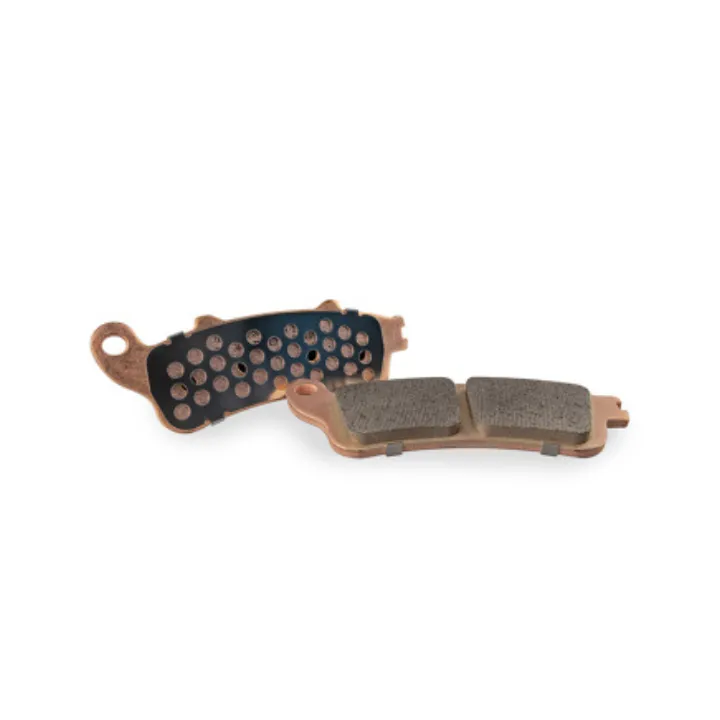
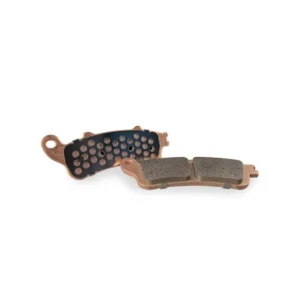
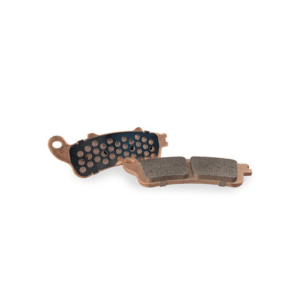
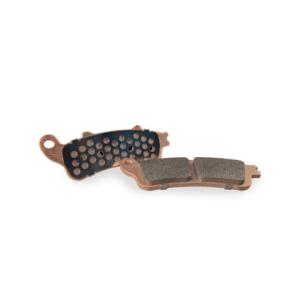
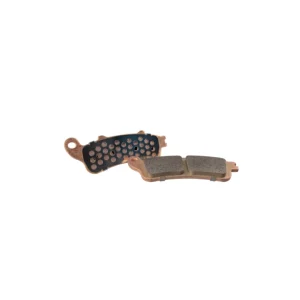
EBC 01-17 Honda CBR 600 RR Rear Right Sintered HH Brake Pads
Part: EBC FA436HH
Sintered brake pads fix the exact problem organic pads can't — a rear brake that fades the moment it heats up. Your rear brake fades after a few hard stops. Lever feels fine cold, then goes soft the second it heats up. That's organic pads doing exactly what organic pads do. Swap in a sintered compound and the problem mostly disappears.
The FA436HH is EBC's Double-H sintered pad, built for the rear right caliper on the CBR600RR. Same FA436 shape shows up on a handful of other sportbikes too, so if you've seen this part number elsewhere, that's why.
What Sintered Brake Pads Actually Give You
Sintered means copper alloy instead of the resin-and-fiber mix in a stock pad. Doesn't sound like much until you're three laps into a track day and your old pads start going away. Copper alloy holds its bite as it heats up. Organic pads do the opposite — cold they're fine, hot they fade. Sintered compounds actually get more consistent once they're warm, and they handle rain better than most people expect from something built for aggressive riding.
Size and Fitment
77.5 x 42.5 x 8.8mm. That's the FA436 shape, and it covers CBR600RR fitment from roughly 2007 onward according to most parts catalogs. Coverage shifts by submodel and whether you've got ABS, so don't just assume. Check the FA436HH number against your bike's OEM part or your VIN before you order. Pad shape can look almost identical across model years and still not fit right, mounting tabs and thickness move around more than people expect.
Installing Without Making It Worse
One box, one caliper, both pads. Not one pad. If you've only got one side worn down, you still replace the pair, because a fresh sintered pad paired with a half-dead organic pad throws the bite off on that side.
Check for shims before you toss your old pads. Some of these ship without OE shims, so pull them off the worn set and reuse them if your caliper needs them.
Install order's the usual: wheel off, caliper off per your manual, old pads out, clean the carrier, push the pistons back evenly so the new pads sit flush, drop in the FA436HH pads plus any clips, torque everything to spec. Don't skip the torque numbers. Loose caliper hardware is a bad place to find out you guessed wrong.
Bed them in properly — progressive stops, building from light to firm. This is what actually gives you the bite these pads are supposed to have. One hard stop from highway speed instead of a proper bedding sequence just glazes them before they've done anything.
Who This Actually Makes Sense For
Track day riders. Aggressive street riders who brake hard and often. Anyone who's felt their rear brake go soft mid-ride and wondered why. Trade-off is a firmer lever and somewhat faster rotor wear, in exchange for pads that don't fade and last longer than organic ones under the same abuse.
Questions People Ask
Will this fit my 2001-2007 CBR600RR?
Most catalogs show FA436/FA436HH starting around 2007 for this bike. Earlier years might use a different pad shape entirely — check your OEM number or VIN first.
Do shims come with it?
Not always. Several listings note no OE shims included. Keep your old ones and reinstall them if your caliper calls for it. EBC's Double-H line does use perforated stainless heat plates where needed.
ABS compatible?
Listed for both ABS and non-ABS CBR600RR trims, but confirm your exact year before buying.
How do I bed these in?
Progressive stops. Low speed, then building up. Short controlled runs, not one long panic stop.
Will my rotors wear faster?
Somewhat, yes. Sintered pads are harder than organic ones and will take a bit more off your rotors over time. That's the trade for the stopping power.
One pad or a full set?
Full set, both pads, per caliper. Install as a pair.
Anything else to know?
Don't mix pad compounds in the same caliper. And if your rotor or caliper hardware's already worn, fix that first — new pads on bad hardware just means uneven wear and a brake that still doesn't feel right.
Related products
- Add to wishlistAdd to compare
EBC 14-17 Honda CBR 1000 RR SP (w/Brembo Front Calipers) Front Left/Right Sintered HH Brake Pads
SKU: ebcFA447HH - Add to wishlistAdd to compare
EBC 00-03 Harley Davidson Sportster XLH 883 Front Left/Right Sintered V Brake Pad Set
SKU: ebcFA400V - Add to wishlistAdd to compare
EBC Sintered HH Front Brake Pads – Harley Fat Bob 18–23 (107/114)
SKU: ebcFA296HH - Add to wishlistAdd to compare
EBC 91-92 Yamaha FZR 400 RR Front Left/Right Sintered HH/R Brake Pads
SKU: ebcFA252HH
Recently viewed products
- Add to wishlistAdd to compare
All Balls Racing 17-19 Polaris ACE 900 EPS XC 8 Ball Axle – Front Left
SKU: abrAB8-PO-8-360
 Account
 Categories
 Car filter
 Search
 Compare
 Top
Reviews
There are no reviews yet.