

Let me be upfront about something: most motorcycle performance guides out there are basically the same article recycled twelve times. They tell you to buy an exhaust, maybe get a tune, and call it a day. That’s fine advice as far as it goes — but it misses the bigger picture entirely.
I’ve seen riders drop $800 on a full exhaust system and then wonder why their bike still feels sluggish. And I’ve seen riders on dead-stock bikes pull away from modified ones simply because they understood what was actually going on under the tank.
So this guide is different. We’re going to start from the basics — how your engine actually makes power — and work our way through everything that affects it. Modifications, yes, but also maintenance, riding technique, and a few things the industry would rather you didn’t know.
By the end, you’ll have a clearer picture of your bike than most people who’ve ridden for years.
How Your Engine Actually Makes Power
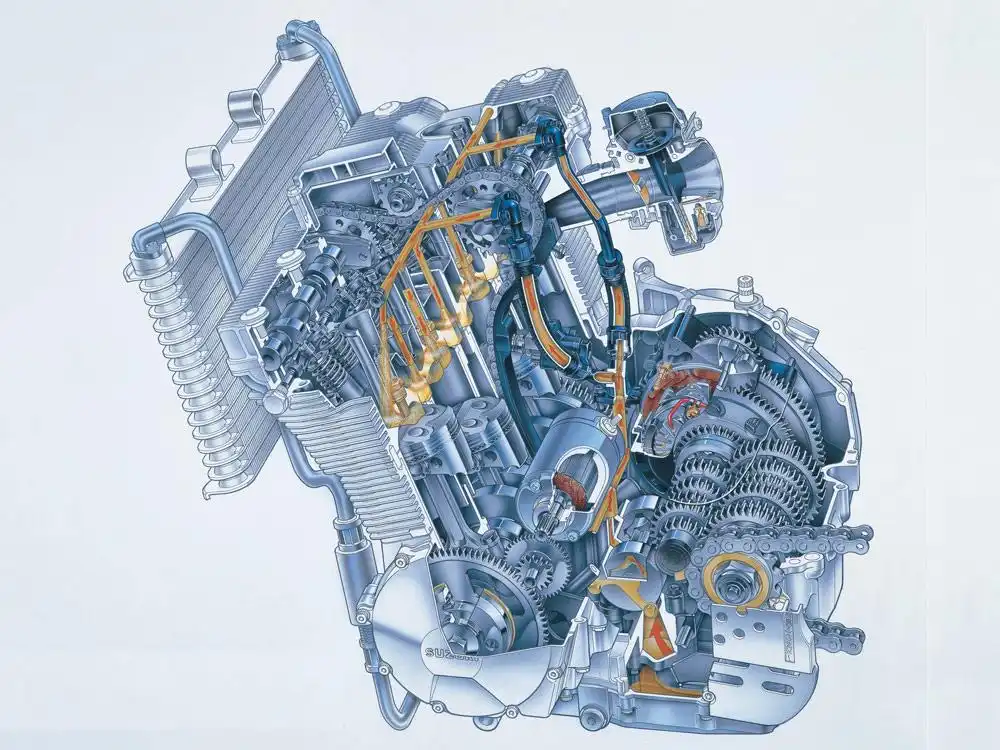
Your motorcycle engine is, at its core, an air pump. That might sound like an oversimplification, but it’s genuinely the most useful mental model you can have. The more air (and the right amount of fuel with it) you can push through the engine efficiently, the more power it makes.
Here’s how the four-stroke cycle works in plain English:
Intake — The piston drops, and the intake valve opens. A mix of air and fuel gets pulled into the cylinder. Think of it like taking a breath.
Compression — The intake valve closes. The piston rises and squashes that mixture into a much smaller space. Higher compression ratios mean more potential energy from the same amount of fuel.
Power — The spark plug fires. The compressed mixture ignites and the resulting explosion slams the piston back down. This is the only stroke that actually produces power — the other three are all just getting ready for this moment.
Exhaust — The piston rises again and pushes the spent gases out through the exhaust valve. Then the whole thing repeats, thousands of times every minute.
Why does this matter practically?
Because every single factor that affects performance — air filters, spark plugs, exhaust systems, fuel maps — ties back to this cycle. Once you understand it, the rest of this guide starts to make a lot more sense.
A well-maintained engine running the four-stroke cycle efficiently will beat a neglected modified one nearly every time. Tune-ups before bolt-ons.
The specs you actually need to understand
Manufacturer spec sheets love to throw numbers around. These are the ones worth paying attention to:
Displacement (cc): The total volume of the engine’s cylinders. Bigger isn’t always better — a 600cc sportbike at 12,000 RPM can make more power than a 1,000cc cruiser at 3,500 RPM — but larger displacement gives you more torque at lower RPM, which is what most street riders actually feel.
Compression ratio: The ratio between the cylinder’s maximum and minimum volume. Most street bikes sit between 10:1 and 12.5:1. Higher compression makes more power but requires higher-octane fuel and puts more stress on components.
Horsepower and torque: We’ll get into these properly later. For now, just know that they’re measured at different points in the RPM range, and both numbers tell you something different about how the bike will actually feel.
What’s Actually Killing Your Engine’s Performance Right Now
Before you spend a single dollar on upgrades, it’s worth knowing what might already be hurting your bike’s output. Most riders are surprised by how much these things matter.
Your air filter is probably overdue
I’m not going to sugarcoat this — a dirty air filter is one of the most common performance killers and one of the most ignored. When the filter gets clogged, airflow into the engine drops. Less air means a richer mixture, incomplete combustion, and noticeably less power.
Research from filter manufacturers has consistently shown that a heavily clogged filter can reduce engine output by 10 to 15 percent. On a 100-HP bike, that’s 10 to 15 horsepower gone for the price of an oil change.
Replacement intervals: Paper filters every 6,000–10,000 miles. Foam filters (common on dirt bikes) clean every 3,000 miles and replace annually. Check your manual — this is one of the cheapest fixes with the highest return.
The air-fuel ratio is more sensitive than you think
Your engine needs roughly 14.7 parts air to 1 part fuel for complete combustion. Modern fuel-injected bikes manage this automatically through the ECU. But if something’s off — a vacuum leak, a dirty injector, altitude change — the mixture drifts and power drops.
Running too rich (too much fuel): black smoke, terrible fuel economy, sluggish response below 4,000 RPM. Running too lean (not enough fuel): popping on deceleration, overheating, power loss at the top of the rev range — and potential engine damage over time.
Carbureted bikes are more prone to this because jetting is fixed. If you ride at altitude regularly, re-jetting for your elevation is one of the most impactful things you can do.
Spark plugs and the ignition system
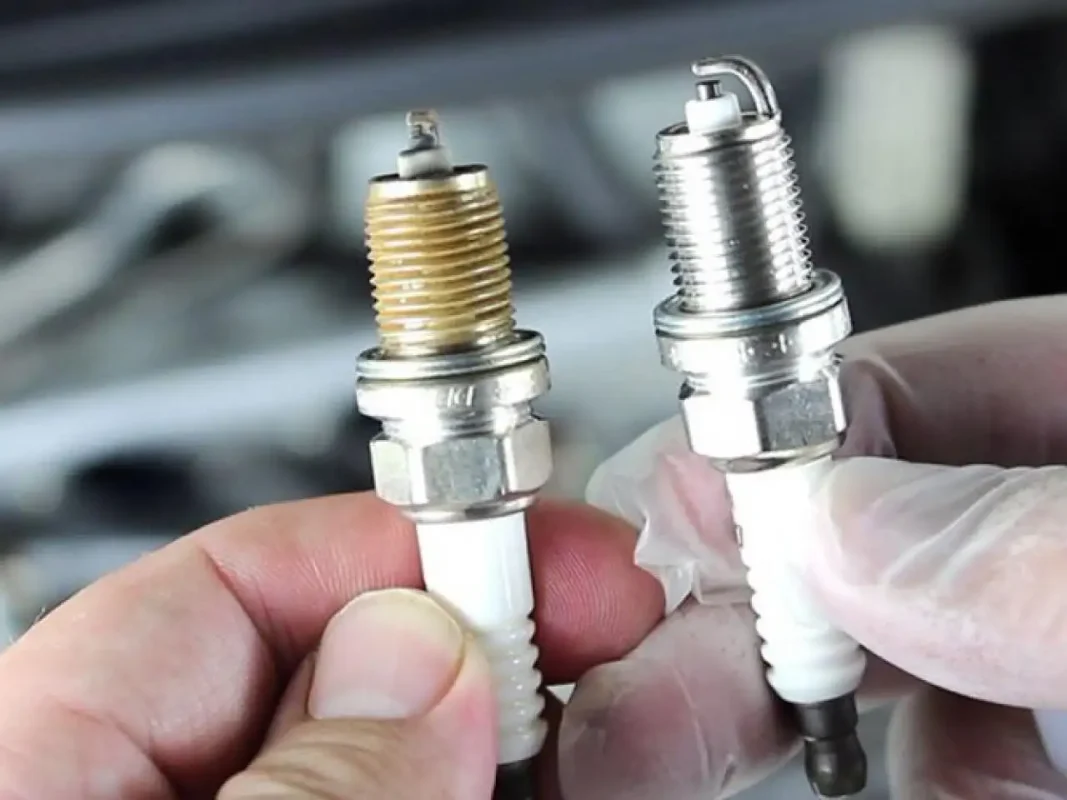
A worn spark plug produces a weaker, less consistent spark. That means some combustion cycles are incomplete — the mixture doesn’t fully burn, and you lose power. On a four-cylinder engine misfiring even occasionally across all four cylinders, the cumulative effect is significant.
New plugs cost $20 to $60 for a full set and take maybe 45 minutes to install. Most manufacturers recommend replacement every 8,000 to 15,000 miles, but if your bike has been sitting or running rough, check them first before anything else.
Engine oil — the one people always skip
Old, degraded oil doesn’t just fail to protect your engine — it actively creates resistance. Viscosity increases as oil breaks down, which means your engine is working harder just to spin its own internals. That friction absorbs power before it reaches your rear wheel.
Beyond changing it on schedule, make sure you’re using the right viscosity grade. Running 20W-50 in an engine designed for 10W-40 in cold weather, for example, increases startup wear and reduces efficiency until the engine warms up fully.
Performance Modifications That Are Actually Worth Your Money
Alright, here’s where it gets interesting. The aftermarket industry is enormous, the claims are often exaggerated, and separating good investments from expensive noise requires some honest information. So here it is.
The exhaust system — still the most effective single mod
An aftermarket exhaust works for a simple reason: the stock exhaust on most bikes is designed for noise regulations, emissions compliance, and cost — not peak performance. Opening up the exhaust flow reduces back-pressure and allows the engine to breathe out more efficiently.
A slip-on muffler (replacing just the end can) typically adds 3 to 7 HP on a stock bike. The improvement feels larger than the numbers suggest because it also sharpens throttle response. Cost: $150 to $500 depending on brand and material.
A full system (headers + mid-pipe + muffler) can add 8 to 15 HP, but here’s the catch most shops won’t mention: you need an ECU tune to realize those gains. Without a proper fuel map, an untuned bike with a full exhaust system can actually run worse than stock in certain RPM ranges.
| Slip-On | Full System | |
| Average HP gain | 3–7 HP | 8–15 HP |
| ECU tune needed? | Recommended | Required |
| Weight reduction | 2–4 lbs | 5–12 lbs |
| Typical cost | $150–$500 | $500–$1,500+ |
| Street legal? | Usually yes | Varies by state |
Sprocket swaps — the underrated one
Nobody talks about this enough. Changing your sprocket gearing is one of the cheapest, most tangible modifications you can make to change how your bike feels. Going one tooth smaller on the front sprocket (or one to two larger on the rear) shortens your gear ratios — the bike accelerates harder in every gear, at the cost of some top speed.
For trail riding, commuting through traffic, or just getting off the line quicker, this change is genuinely transformative. Parts typically cost $40 to $80, and installation takes about an hour if you’re changing the chain at the same time anyway.
Suspension setup — free, and most people skip it entirely
Your suspension came from the factory set for an “average” rider of around 165 to 175 lbs. If you weigh significantly more or less than that, or if you carry a passenger, your suspension sag is probably wrong. And wrong sag means the bike isn’t handling anywhere close to how it was designed to.
Setting sag takes about 30 minutes and costs nothing. You need a paddock stand, a tape measure, and someone to hold the bike. Correct sag dramatically improves mid-corner stability, reduces front-end dive under braking, and makes the whole bike feel more planted. It’s the single best thing most riders have never done.
What’s generally not worth it for most riders
Power commanders and piggyback fuel controllers without a proper tune on a dyno tend to be a waste of money. They give you the knobs without the knowledge. High-flow velocity stacks on an otherwise stock engine add very little. And any “performance chip” claiming to add 20 HP without touching anything else is simply a lie — the physics don’t support it.
Maintenance and Performance: The Connection Most Riders Miss
Here’s something I genuinely believe: a meticulous maintenance routine on a stock bike beats a modified bike that’s been ignored. The two riders I’ve met with the fastest lap times on relatively modest machines both kept immaculate service records. That’s not a coincidence.
Chain tension and lubrication
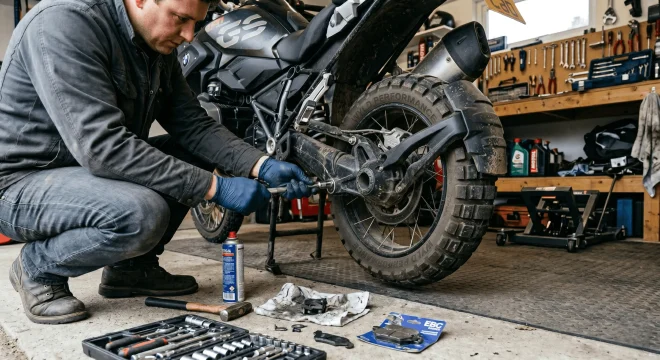
A dry, stretched chain is burning power right now if your bike is running one. A chain under high tension or with stiff links creates friction and can lose 5 to 8 percent of engine power before it even reaches the rear wheel. On a 90-HP bike, that’s 4 to 7 HP gone — more than most bolt-on modifications add.
Clean your chain every 500 miles under normal conditions, or after every single ride in wet or muddy conditions. A stretched chain — where you can pull it more than a quarter inch away from the rear sprocket — needs replacing, not just adjusting.
ProTaper chains (520XRC, 520MX1, 428MX1) are available through Wyld Performance in multiple sizes. If you’re replacing the chain, do the sprockets at the same time — worn sprockets eat new chains.
Tire pressure matters more than most people realize
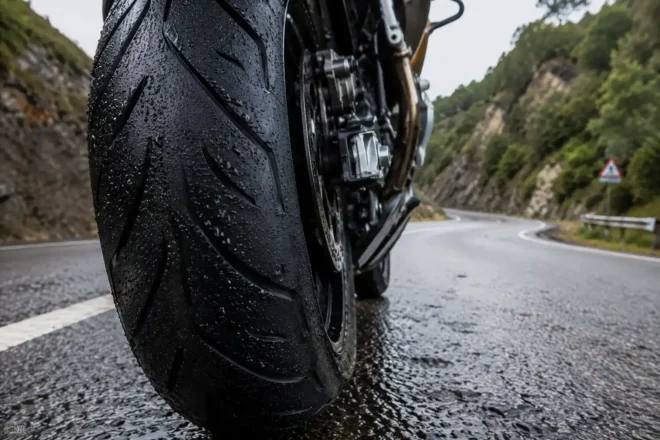
Under-inflated tires increase rolling resistance — your engine is working harder just to keep the bike moving at highway speed. They also heat up faster and wear unevenly. Over-inflated tires reduce the contact patch and compromise grip in corners.
Check pressure weekly, always cold (before riding). The correct pressure is on the sticker on your swingarm or in the owner’s manual — not the maximum PSI molded into the tire sidewall, which is a safety limit, not a target.
A quick service reference
| What | When | Why it affects performance |
| Engine oil | 3,000–5,000 mi | Reduces internal friction, protects power output |
| Air filter | 6,000–10,000 mi | Maintains airflow; clogged = 10–15% power loss |
| Spark plugs | 8,000–15,000 mi | Consistent ignition = complete combustion |
| Chain lube | Every 500 mi | Cuts drivetrain friction loss |
| Tire pressure | Weekly / pre-ride | Rolling resistance, grip, fuel economy |
| Brake fluid | Every 2 years | Brake feel, stopping distance consistency |
How the Way You Ride Changes What Your Bike Can Do
I’ll put this plainly: if you’re looking for more performance, the most effective upgrade available is almost certainly not on the Wyld Performance website. It’s in your right hand and your body position.
Two riders on identical bikes will produce completely different results. Throttle control, braking technique, body positioning — these matter far more than most people are willing to admit because hardware upgrades are more fun to buy.
Throttle control is everything in corners
The throttle is not an on/off switch. On the road and especially on track, smooth, progressive throttle application — beginning just after the apex — keeps the tire loaded and in contact with the road surface. Grabbing a fistful of throttle mid-corner unweights the front, upsets the balance, and in a worst-case scenario, causes a highside.
Think of the throttle as something you roll onto gradually. On track, the goal is to be smoothly but firmly accelerating from just after the apex to the next braking point. On the street, it just means being deliberate rather than aggressive.
Most riders only use half their brakes
The front brake provides roughly 70 to 80 percent of your stopping power. Most street riders either don’t know this or don’t trust it, so they rely heavily on the rear brake and end up with much longer stopping distances than the bike is capable of.
Trail braking — maintaining light front brake pressure past the turn-in point and releasing it progressively through the corner — is one of the highest-return skills a road rider can develop. It’s not just a track technique. It loads the front tire, sharpens turn-in, and gives you more margin if something unexpected happens mid-corner.
City riding vs highway: the real cost to your bike
| Factor | City / Stop-Go | Highway / Cruise |
| Engine load pattern | Constant acceleration cycles | Steady, lower stress |
| Fuel economy | 8–14% worse on average | Consistent, more efficient |
| Chain wear | Faster (constant load shifts) | Slower, more even |
| Tire wear pattern | Center strip worn quickly | More even across contact patch |
| Oil degradation | Faster (heat cycles) | Slower |
Five Performance Myths That Cost Riders Real Money
The motorcycle industry — and honestly, a lot of rider culture — is full of half-truths. These are the five I encounter most often.
Myth 1: A louder exhaust means more power
No. Noise and power are completely different things. A straight-through pipe with no baffles is loud, yes, but it also destroys low-end torque by eliminating back-pressure. The engine needs some resistance in the exhaust system to build cylinder pressure effectively at low RPM.
A well-engineered performance exhaust is carefully tuned for specific back-pressure characteristics across the RPM range. That’s why a good Akrapovic or Yoshimura system is expensive — the engineering is real. A loud cheap can is just loud.
Myth 2: Premium fuel makes any bike faster
Premium fuel is only beneficial if your engine’s compression ratio requires it — typically 10.5:1 or higher. Higher octane fuel resists pre-ignition (knock) at high compression. If your engine doesn’t have high compression, premium fuel provides no benefit over regular.
Most standard street bikes run fine on 87 octane. Check the minimum requirement in your owner’s manual. If it says 87, running 93 is genuinely just wasting around $0.30 per gallon for zero return.
Myth 3: Wider rear tires make you faster
This one is especially persistent. Wider tires actually increase rolling resistance and change the bike’s handling geometry in ways that usually make it harder to turn in. OEM tire widths are chosen by engineers who’ve spent months optimizing the bike’s handling — not randomly.
There are specific cases where wider rubber makes sense — drag racing, certain track applications — but for street riding, going significantly wider than stock on the rear generally makes the bike heavier to steer and no faster.
Myth 4: You need to warm up for 5 to 10 minutes at idle
Modern fuel-injected bikes reach operating temperature faster under gentle riding load than sitting at idle. When the engine is idling, oil pressure and flow are at their minimum. When you ride gently, oil circulates properly and the whole drivetrain warms evenly.
The correct approach: start the bike, give it 30 to 60 seconds to build oil pressure, then ride gently for the first two miles. Carbureted bikes and older machines benefit from a slightly longer idle warm-up — maybe 90 seconds — but still not five minutes.
Myth 5: Cheap modifications always underperform
This one goes the other way. Some of the most effective performance work you can do costs almost nothing. A fresh set of spark plugs, correct tire pressure, a clean air filter, properly set suspension sag, adjusted chain tension — these changes on a neglected bike can feel more transformative than a $600 exhaust on an already well-maintained one.
The expensive stuff matters more when the cheap stuff is already sorted. Do it in order.
Torque vs Horsepower — What the Numbers on the Spec Sheet Actually Mean
These two numbers get more attention than almost anything else in motorcycle specs, and they’re genuinely misunderstood — sometimes even by people writing about them. Let’s clear it up, because once you understand the relationship, you can read any bike’s character from its dyno curve before you ever sit on it.
Torque is the feeling. Horsepower is the math.
Torque is rotational force — literally how hard the engine is twisting the crankshaft. It’s what you feel when the bike pulls hard from low RPM. High torque at low revs means the bike feels effortless and muscular in everyday riding. This is why a big cruiser or adventure bike feels so satisfying to ride in traffic even if its peak horsepower number is modest.
Horsepower is derived from torque — it’s what you get when you multiply torque by RPM and divide by a constant (5,252 in imperial units). Because RPM multiplies the torque, a high-revving engine can produce enormous horsepower from relatively modest torque. That’s the entire concept behind a 600cc sportbike: small displacement, modest torque, but stratospheric RPM producing impressive power numbers.
At exactly 5,252 RPM, a bike’s torque and horsepower figures are always equal. Below that, torque is higher. Above it, horsepower is higher. That’s just math — but it explains why low-revving engines feel so different from high-revving ones.
What this means when you’re choosing a bike — or a modification
If you want accessible, easy power for street riding: look for peak torque at low RPM (under 5,000). If you want maximum outright performance and are willing to keep the revs up: look for high peak HP and a broad powerband through the mid-range.
For modifications, this is why exhaust and ECU tuning on a high-revving sportbike improves peak HP significantly but may actually reduce low-end torque unless the tune is done carefully. And it’s why a torque-focused cruiser often gains more from a slow-speed gear ratio change (sprockets) than from any engine modification.
Quick reference: character by bike type
| Type | Peak Torque | Peak HP | How it feels |
| Cruiser (e.g. HD 1200) | 75–80 lb-ft @ 3,500 | 65–75 HP | Lazy, muscular, effortless |
| Naked / Standard | 55–65 lb-ft @ 6,000 | 80–110 HP | Balanced, versatile |
| 600cc Sportbike | 45–55 lb-ft @ 10,000 | 95–120 HP | Needs revving, urgent |
| 1000cc Superbike | 80–90 lb-ft @ 10,500 | 180–215 HP | Extreme in every gear |
| Adventure (KTM 1290) | 95–105 lb-ft @ 6,500 | 150–160 HP | Wide, usable, capable |
A Few Questions That Come Up a Lot
Does changing my exhaust really make a noticeable difference?
Yes, but the honest answer is: it depends on what else you’ve done. On a completely stock bike with stock air box and stock ECU mapping, a slip-on will sharpen the throttle response and improve the sound significantly. Actual power gains sit in the 3 to 5 HP range, which you can feel but won’t change your life. Pair it with a proper tune and the story is different — you can see 10 to 12 HP on a responsive 600cc or liter-class bike.
What’s the single best thing I can do for performance without spending much?
Set your suspension sag correctly for your weight. It costs nothing, takes 30 minutes with basic tools, and makes a bigger difference to how the bike actually handles than almost any hardware upgrade under $300. Most bikes come from the factory set for a rider around 165 to 175 lbs. If you’re meaningfully different from that, your geometry is currently wrong.
Is ECU tuning legal on the street?
In most US states, yes — with caveats. If your state requires emissions testing and you modify the fuel map away from stock parameters, you could fail that test. For track-only bikes it’s completely unrestricted. For street bikes in non-emissions-test states, ECU tuning sits in a gray area that law enforcement generally doesn’t pursue. Check your state regulations before committing.
How much does weight actually matter?
More than people think, especially rotational weight. Every pound you remove from wheels, tires, or brake rotors is worth considerably more in handling terms than a pound removed from static weight like the seat or tank. Reducing unsprung weight improves suspension response, steering, and feel in a way that’s immediately noticeable — even when the reduction is small.
Where to Start
If you’ve read this far, you probably have a clearer picture of what’s actually going on with your bike. Here’s how I’d prioritize if I were starting from scratch:
- Maintenance first — fresh oil, new plugs, clean air filter, correct chain tension, right tire pressure. Before anything else.
- Suspension sag — set it for your weight. Free, transformative, almost nobody does it.
- Tires — if yours are over three years old or heavily worn in the center, new rubber will improve performance more than any other single purchase.
- Riding technique — spend a day at a track day or riding school. The returns on this are enormous and permanent.
- Then, if you want more: exhaust and tune together, not separately. Sprocket gearing if you want a different character. Chassis modifications if you’re doing track work seriously.
We have available ProTaper chains and sprockets, Bridgestone and Dunlop tires, BikeMaster and Antigravity batteries, air filters, brake components, suspension parts, and more — for Honda, Yamaha, KTM, Kawasaki, Harley-Davidson, and most other makes. Free shipping on orders over $99. If you’re not sure what fits your bike, use the vehicle filter on the shop page and it’ll show you compatible parts directly.
 Account
 Categories
 Car filter
 Search
 Compare
 Sidebar
 Top
Top